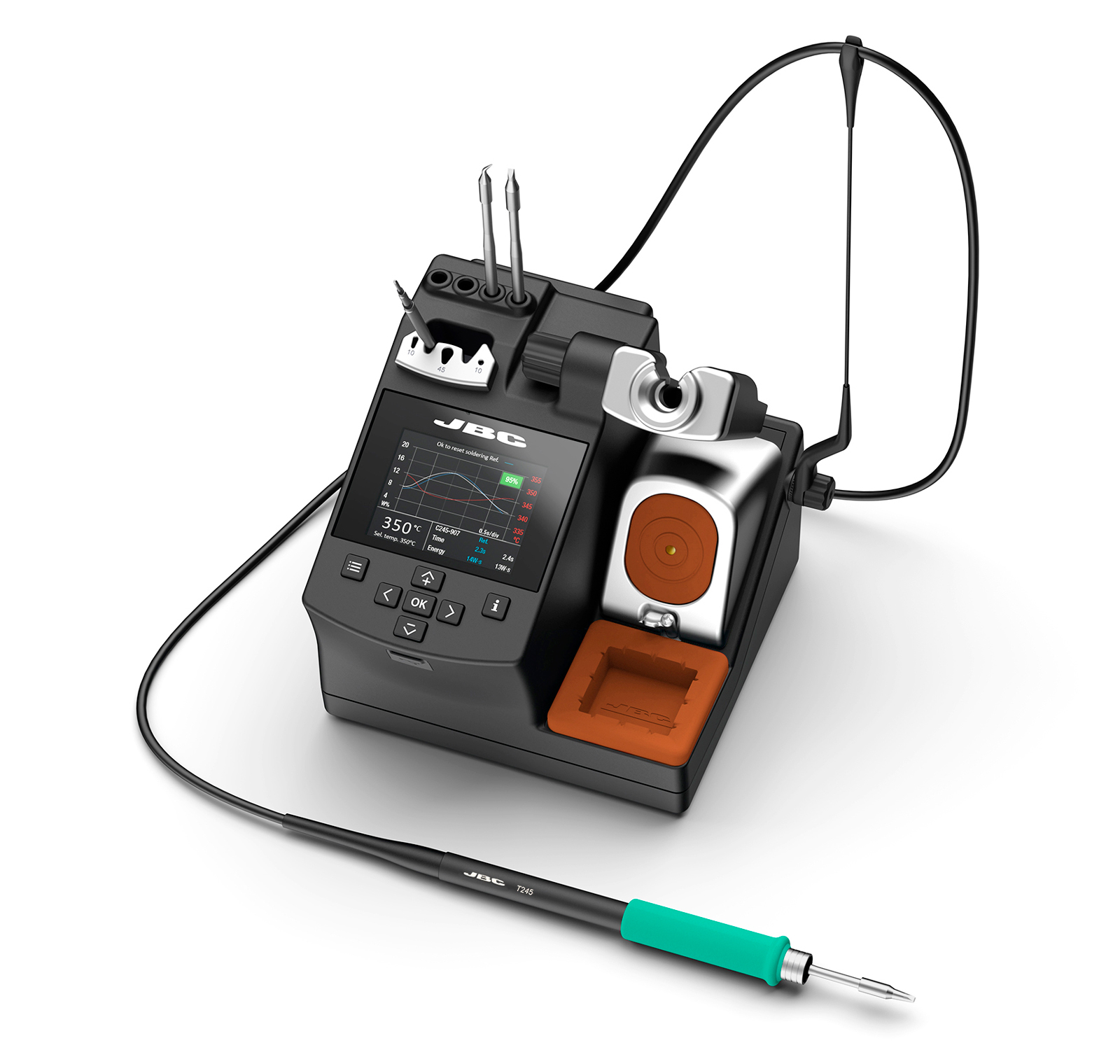

Have you ever wanted a way to help improve soldering quality in real-time?
Well, now you can with JBC's very own soldering assistant station.
But what is a soldering assistant, and how does the CDE differentiate from the rest of the JBC compact family?
In this short article, we are going to illustrate exactly how the CDE can help improve the repetitive soldering skills required in modern-day electronics.
| Page Contents |
| How The Soldering Assistant Works |
| How To Configure The Soldering Assistant |
| Energy Used In The Soldering Process |
| Measured Energy In Real Time |
| Optimising The Soldering Process |
| Where Is The Perfect Fit For The CDE |
| Key Benefits Of The CDE |
How The Soldering Assistant Works
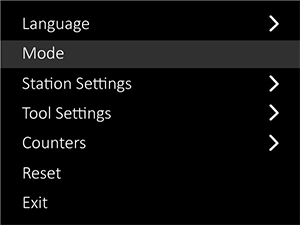
1) Configure – Set the proper soldering configuration to obtain the best quality soldering in just a few steps and activate the Soldering Assistant.
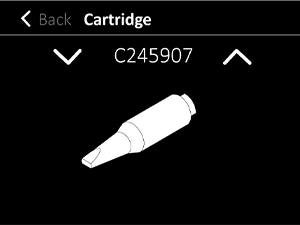
2) Select Cartridge – Select the cartridge that you intend to use, with the entire C245 catalogue displayed on the unit. This sets up the proper internal configuration to help achieve consistent results during the soldering process.
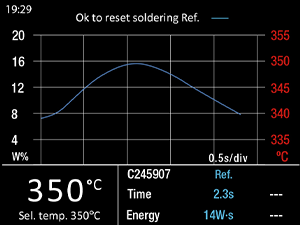
3) Perform Soldering Reference – Have an experienced operator produce a solder joint that will be used as the standard (or reference point) that other soldering joints will be compared to.
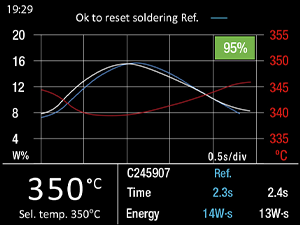
4) Practice – The station is then ready to be used and all joints will be compared to the reference joint previously set. You can then practice your soldering to replicate this joint.
How To Configure The Soldering Assistant
The CDE carries all of the same soldering technology that people have become familiar with when using the JBC compact series.
This includes:
- All of the ergonomic features to do with the cleaning, cable and soldering stand.
- Intelligent heat management system (sleep and hibernation modes).
- Ergonomic tool (T245) compatible with all C245 soldering tips.
The main difference is the new Soldering Assistant technology. This compares new soldering joints with a prestored soldering reference joint, which is set by the user.

The operator will then receive feedback from the station, green for a pass and red for failure, alongside a percentage value that indicates how close each joint is to the soldering reference.
The pass and fail percentages can be determined by the user, meaning you can increase or decrease the pass mark for each joint based on your application and requirements.
This makes the Soldering Assistant the ideal way to improve an operator's soldering abilities!
Energy Used In The Soldering Process
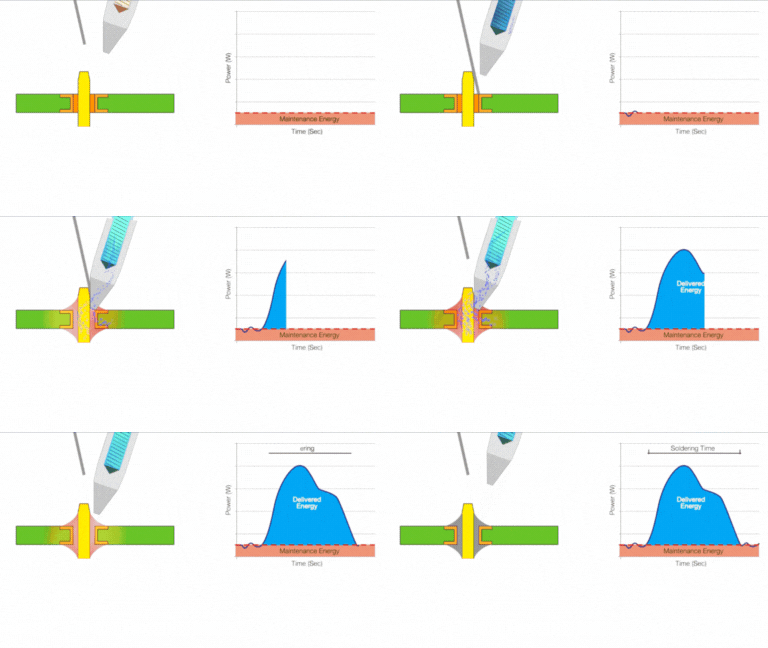
Whilst there are other determining factors, the truest way to measure whether two soldering joints are equal is by measuring the energy delivered.
The data for both working temperature and the time taken to perform the joint are helpful. But these are not enough on their own to truly determine whether the soldering joints are a mirror image of one another.
See the graph below, which illustrates this perfectly:
Measure Energy in Real Time
There is nothing quite like instant feedback.
he station identifies when a soldering joint is performed, automatically recording the power delivered, the time taken and measures the energy that has been supplied.
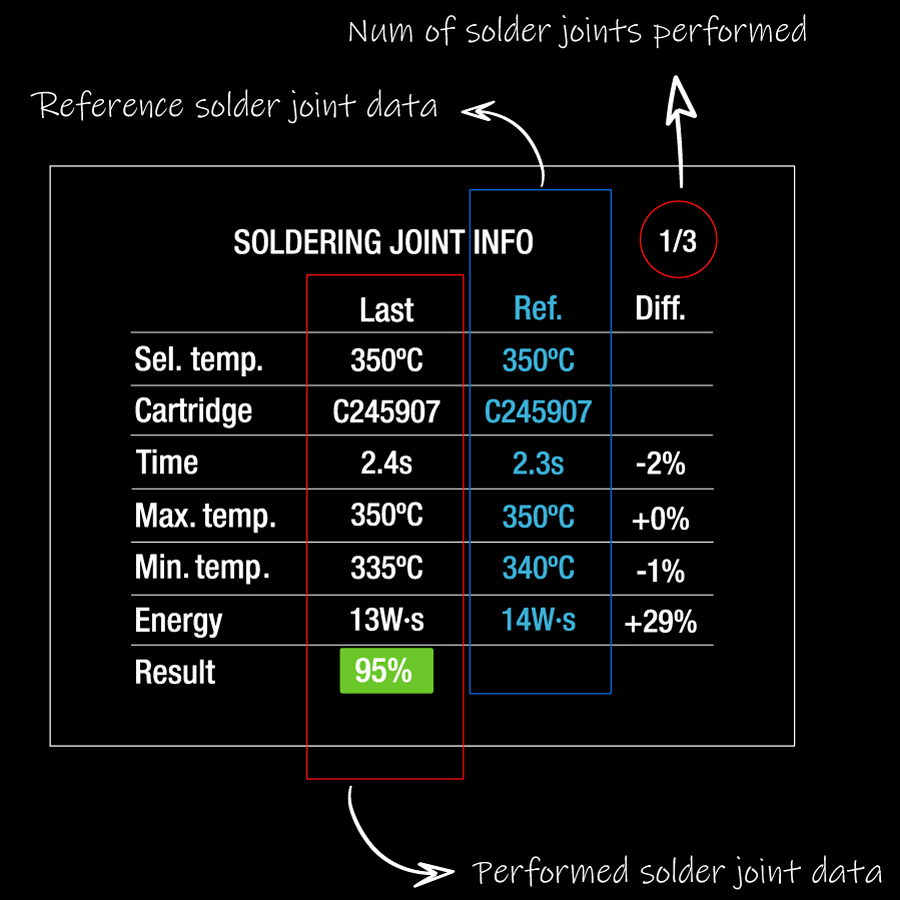
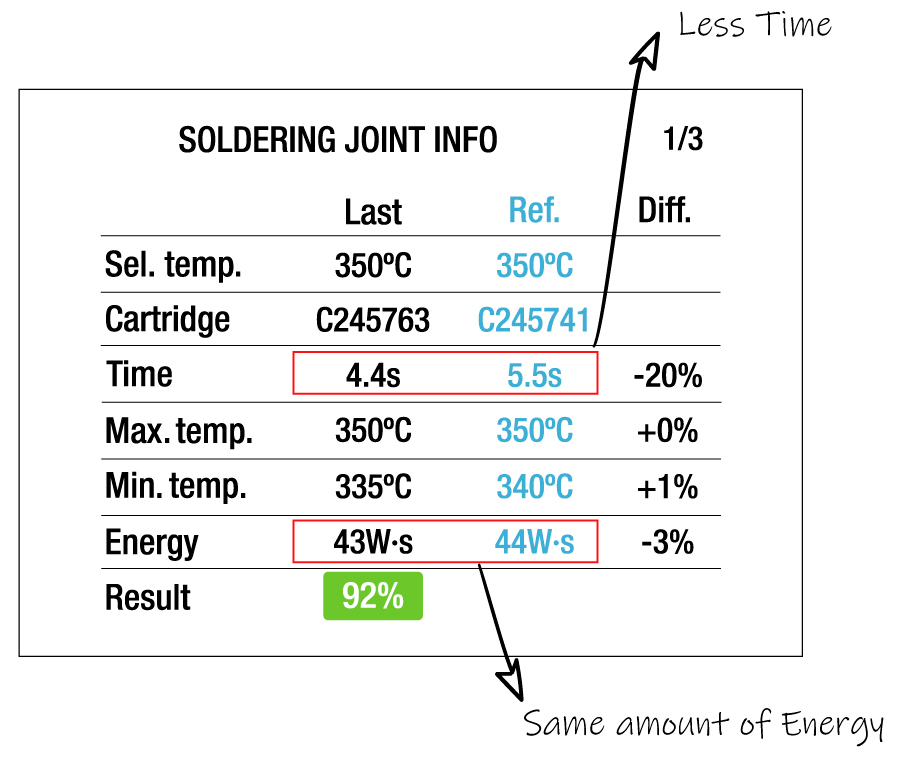
Instant feedback is exactly what you get from the CDE. It measures energy in real time, providing a side-by-side data read from the performed joint, to the reference profile that has been used.
It also tracks how many joints have been performed, with data that displays a percentage difference between the average of the joints performed and the reference joint.
This gives real trackable data to see where optimisations are required.
Optimising The Soldering Process
When you are trying to optimise your soldering process, the CDE provides the perfect vehicle to achieve this.
You can analyse joint by joint, operator by operator, to pinpoint the exact places where small optimisation tweaks can amount to better results in production.
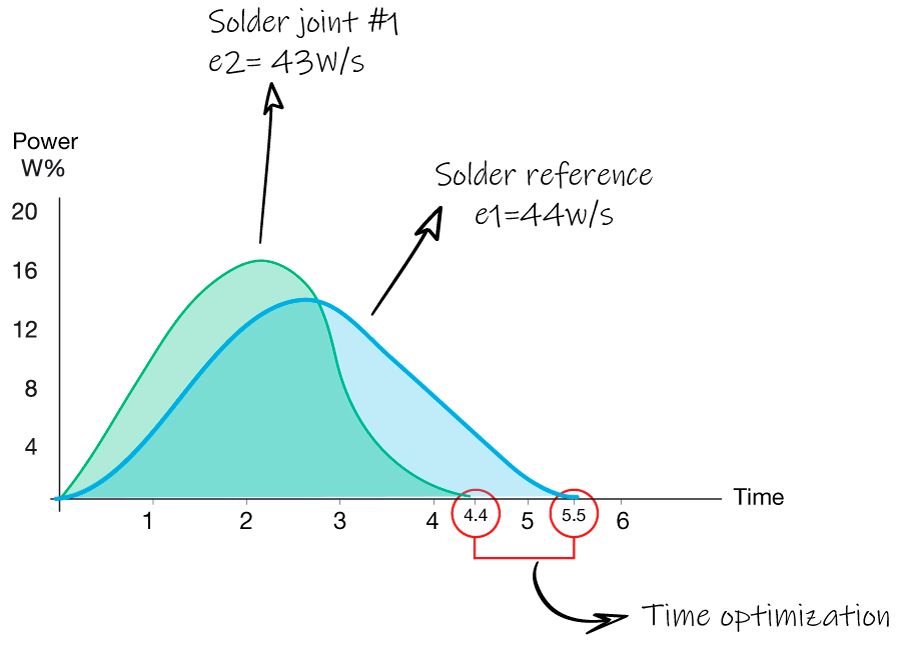
Simply analysing the time and energy output of the joint can paint a picture to the operator. They can see the standard and work towards matching it joint by joint.
Over time, with repetition, the standard of each part of production using the CDE will increase to meet the baseline you set.
Below is the perfect illustration for how you can compare a soldering joint to the reference profile.
In Summary
Key Benefits
- Know the energy delivered to each of your soldering joints
- Monitor the soldering process for optimisation
- Obtain information for where your process can be optimised
- Help operators with little experience, coach them into how to improve their technique and approach to each joint.